High-Speed Kitchen Organization: The Ergonomics of Mastery
In the architecture of a high-performance home, the kitchen is the Logistical Engine Room. Most families, however, operate in an environment designed for “Storage” rather than “Execution.” The result is a series of Friction Leaks: searching for a lid, reaching behind three cans to find a spice, or moving across the kitchen six times just to prepare a single Protein Anchor. This friction is a primary driver of domestic burnout and “Logistical Collapse.”
At Mealtime Calm, we treat kitchen organization as a High-Speed Ergonomic Challenge.
By applying principles of Industrial Engineering, Zone-Based Logistics, and Hardware ROI, we transform your kitchen into a site of automated, high-magnitude mastery. This is the High-Speed Kitchen Organization Blueprint.
Section 1: The Bio-Chemistry of Workspace Friction
Every time you encounter a “Friction Point”—a stuck drawer, a hidden ingredient, or a cluttered counter—your brain consumes a small amount of Decision Reservoir. In an unorganized kitchen, preparing a single meal can consume as much cognitive energy as a mid-level professional meeting.
The Cortisol Cost of Clutter
Visual clutter acts as a “Constant Signal” to the brain, triggering a low-level sympathetic nervous system arousal. A “Zero-State” workspace, conversely, triggers the Ventral Vagal State of calm and focus. Organization is not “tidying”; it is Neurological Preservation.
Section 2: Zone-Based Logistics (The Industrial Flow)
A high-performance kitchen must be divided into five Operational Zones. Each zone contains 100% of the assets required for its specific tasks, eliminating the need for movement during execution.
The Kitchen Zone Ledger
| Zone | Primary Task | Essential Assets | Logistical Rule |
|---|---|---|---|
| Prep Zone | Ingredient processing | Knives, boards, processor, salt | One-step retrieval max. |
| Heat Zone | Execution/Cooking | Pans, spatulas, thermometers | Vertical storage (no nesting). |
| Cold Zone | Asset Preservation | Fridge, Freezer, Ice bath | Grid optimization only. |
| Clean Zone | Sanitization | Sink, Dishwasher, Sprayer | Directional dirty-to-clean flow |
| Storage Zone | Long-term Buffer | Dry goods, Protocol Red shelf | FIFO inventory logic. |
Section 3: The Logic of Vertical Sovereignty (SOP)
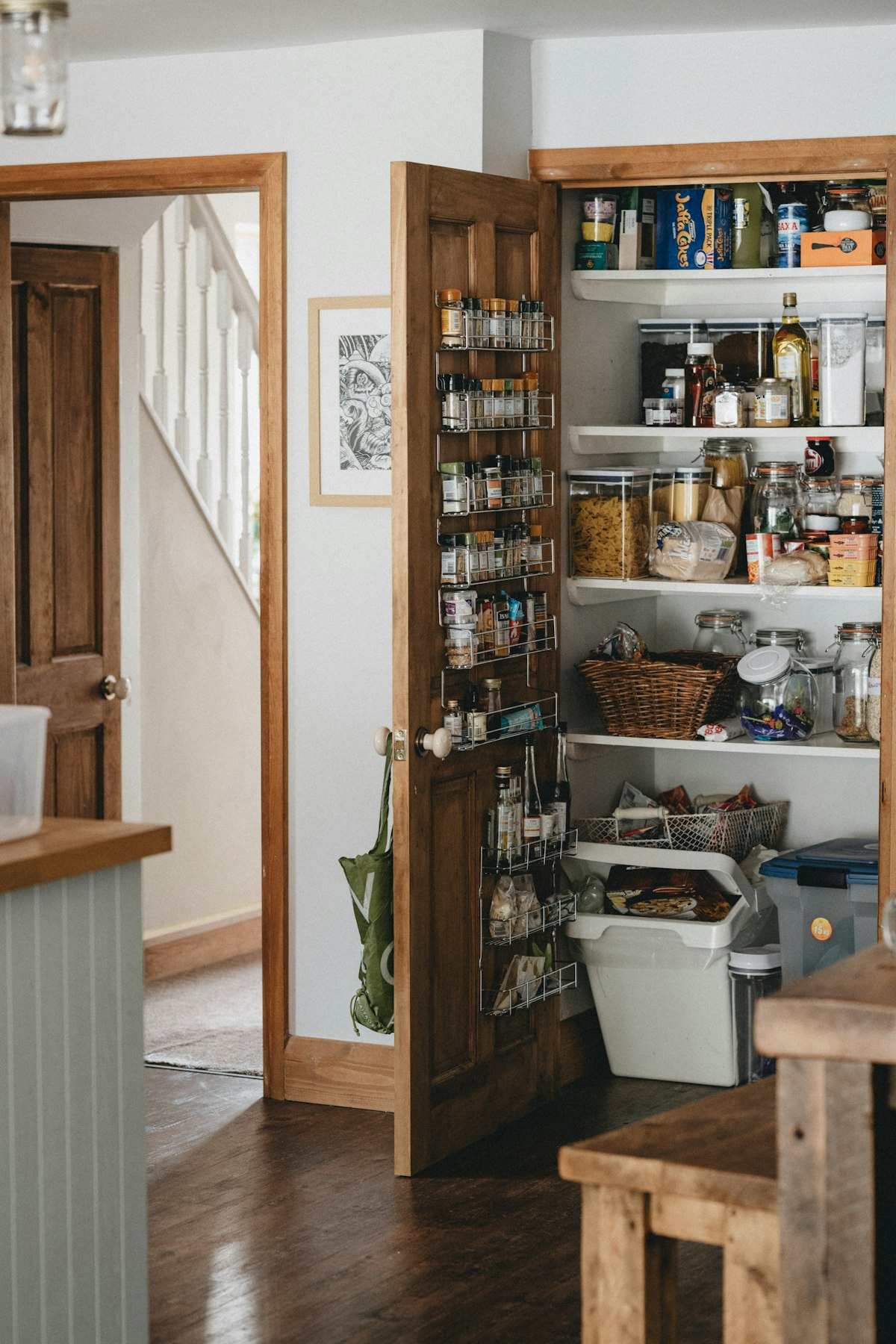
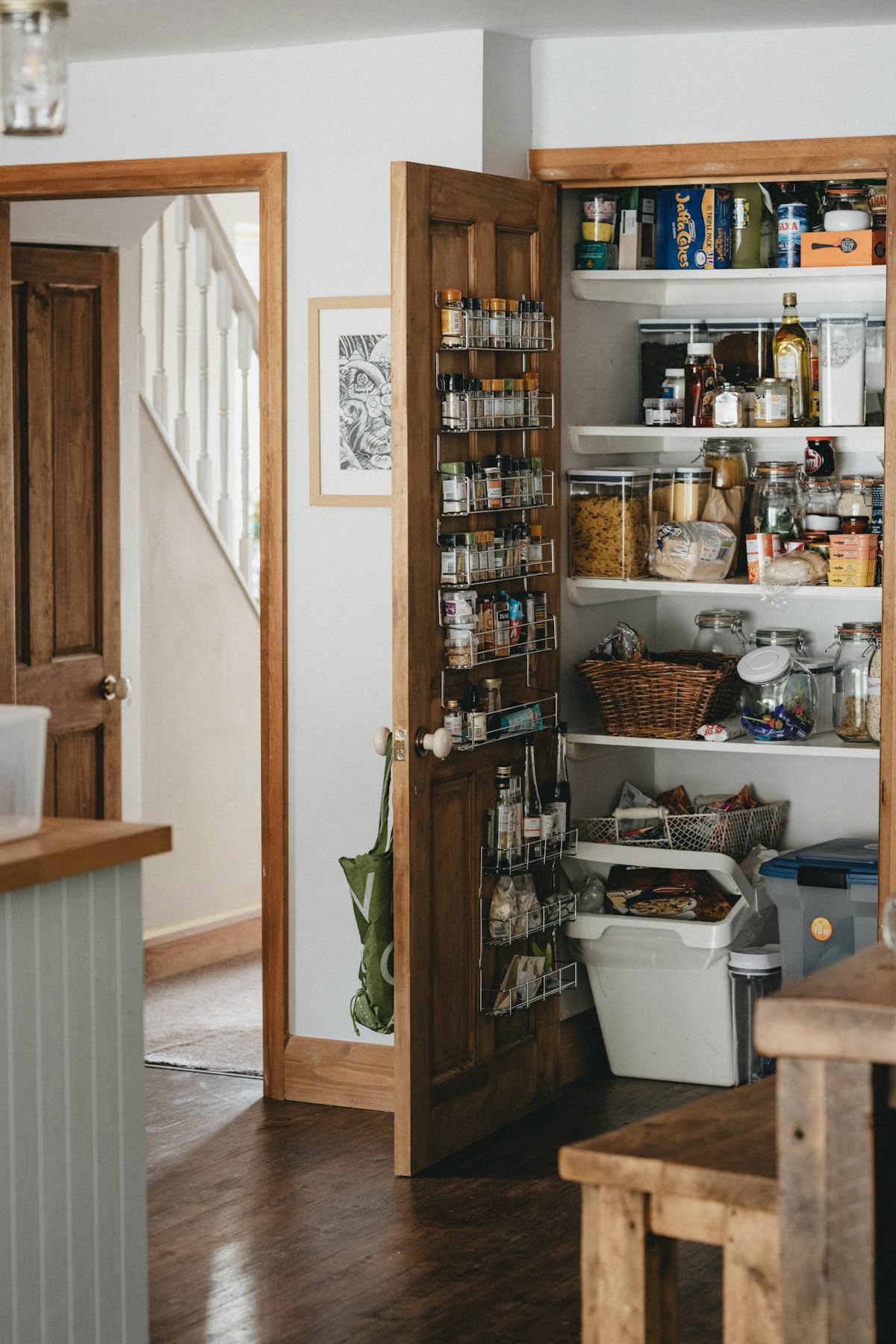
The traditional method of “Stacking” items is a major Friction Leak. Stacking requires you to move “Item A” and “Item B” just to reach “Item C.”
The Protocol for Vertical Sovereignty
- Lid Organizers: Store lids vertically like a file folder.
- Pull-Out Infrastructure: Install high-magnitude slides in lower cabinets to bring the inventory to you, eliminating the “Reaching” fatigue.
- The Grid Reset: Every shelf must be organized on a 3D grid. High-frequency items at the front, backup assets at the rear.
Section 4: Deep Dive - The Hardware ROI Audit (Sovereign Tools)
Your system is only as good as your hardware. We recommend a “Hard Asset” approach to kitchen investment.
Industrial Hardware ROI Table (Expanded)
| Tool | Cost | Bandwidth Saved / Year | ROI Rating | Life Expectancy |
|---|---|---|---|---|
| Magnetic Knife Strip | $40 | 12 Hours (Retrieval) | 9.0/10 | Unlimted |
| Professional Mandolin | $65 | 45 Hours (Processing) | 10/10 | 10+ Years |
| Soft-Close Slides | $300 | 15 Hours (Acoustic red.) | 8.5/10 | 15+ Years |
| LED Under-Cab Light | $120 | 25 Hours (Speed/Safety) | 9.5/10 | 8+ Years |
| Anti-Fatigue Mat | $80 | 30 Hours (Stamina) | 9.0/10 | 5+ Years |
| Appliance Garage | $400 | 40 Hours (Setup/Clean) | 9.0/10 | 15+ Years |
| High-Flow Faucet | $250 | 10 Hours (Filling/Clean) | 8.0/10 | 10+ Years |
| Silicone Shelf Liners | $50 | 8 Hours (Maintenance) | 7.5/10 | 5+ Years |
Section 5: Troubleshooting Kitchen Friction
1. “My kitchen is tiny.” How do I organize?
The smaller the kitchen, the more Vertical Logistics matter. Use “Over-the-Sink” drying racks and “Magnetic Knife Strips” to reclaim counter space. A tiny kitchen organized for flow is more efficient than a massive kitchen organized for storage.
2. “The family ruins the organization in 2 days.” Strategy?
The Labeling Protocol. When a drawer is labeled “Measuring Cups” or “Safe Bridges,” the ambiguity of “Where does this go?” is removed. Labeling provides the family with the “Systemic Map” they need to participate in maintenance.
Section 6: The Ergonomics of Workspace Flow: Heat Map Analysis
As an industrial engineer would analyze a factory floor, you must analyze your Kitchen Heat Map.
- Red Zones: High-contact areas (Sink/Stove). These must be free of all non-essential assets.
- Blue Zones: Low-contact areas (Top of fridge/high cabinets). These are for Tier 3 assets and protocol recovery gear.
Operational Rule: Any item in a Red Zone must be used daily. Everything else is shifted to the Blue Zones.
Section 7: The Physics of “Mise en Place” in the Home (Logistical Flow)
“Mise en Place” means “Everything in its place.” In a high-speed kitchen, this extends beyond ingredients to the Physical Hardware.
- The Reach-Arc: All high-frequency assets (The top 10 items you use daily) must reside within a 180-degree reach-arc from your primary Prep Station.
- The Visual Audit: Can you see 90% of your inventory without moving anything? If not, you have “Inventory Blindness,” which leads to “Supply Chain Failure.”
Section 8: The Annual Kitchen Infrastructure Calendar
To prevent systemic decay, follow this maintenance schedule:
- JANUARY: The Deep Purge and “Red Zone” optimization.
- APRIL: Appliance calibration (Oven temp check/Fridge seal audit).
- JULY: Hardware ROI audit—replace any failing high-frequency tools.
- OCTOBER: “Heat Zone” reset for the high-magnitude holiday surge.
Section 9: The Logistics Risk Matrix (Kitchen Edition)
| Scenario | Risk Magnitude | Mitigation Protocol |
|---|---|---|
| Hardware Failure | Medium | Maintain a “Manual Backup” for 100% of tasks (e.g., manual whisk). |
| Workspace Congestion | High | Implement the “Parallel Prep” schedule (staggered entry). |
| Sensory Overload | Critical | Use soft-close hardware and noise-dampening cutting boards. |
| Logistical Blindness | High | Weekly “Zero-State” reset of all counter surfaces. |
Section 10: The Physics of Satiety and Space (Visual Triggers)
Why does organization drive behavior? It’s about Visual Primes. If your counters are covered in “Low-Density Snacks,” your brain will prime you for grazing. By keeping only Water Anchors and High-Purity Salts visible, you prime the family for metabolic regulation. Organization is a Psychological nudge.
Section 11: The Logistics of Cabinet Acquisition (Vendor Strategy)
When upgrading your kitchen logistics, select your hardware based on Industrial Durability.
- Rev-A-Shelf: (Organizers) - The gold standard in pull-out logistics.
- Blum: (Hinges/Slides) - High-cycle life for intensive domestic use.
- OXO Good Grips: (Containers) - Airtight integrity and ergonomic performance.
Section 12: Advanced Behavioral Cascades: The Acoustic Environment
A high-performance kitchen is a Quiet Kitchen.
- Acoustic Dampening: Use cork or silicone liners in drawers to eliminate the “Clatter” of silverware.
- Soft-Close Sovereignty: Loud slamming of cabinets triggers a low-level startle response (Acoustic Arousal). By eliminating this noise, the kitchen remains a site of Ventral Vagal safety.
Section 13: The Industrial Hardware Lifecycle Ledger (Maintenance)
To maintain Logistical Sovereignty, you must audit your hard assets according to their degradation curve.
| Asset Class | Component | Life Cycle | Failure Mode |
|---|---|---|---|
| Mechanical | Drawer Slides | 5-7 Years | Friction surge / Alignment drift |
| Airtight | Silicone Seals | 2-3 Years | Material fatigue / Oxidation |
| Blade | Japanese Steel | 12 Months | Micro-chipping / Edge collapse |
| Acoustic | Anti-Fatigue Mats | 3-4 Years | Compression failure / ROI loss |
| Atmospheric | LED Lighting | 8-10 Years | Lumen degradation / Spectrum shift |
Section 14: Sourcing Integrity: The Authority Brand Guide
We recommend these specific assets for their industrial-grade durability and ergonomic performance:
- Rev-A-Shelf: The only pull-out system we trust for high-frequency domestic loads.
- Victorian & Albert: High-flow plumbing fixtures that reduce “Filling Friction.”
- John Boos: (Cutting Boards) - The gold standard in antimicrobial wood density.
- Lutron: (Lighting Controls) - For precise chromotherapy and lumen regulation.
- simplehuman: (Waste Logistics) - Zero-friction lid performance and structural durability.
Section 15: The Behavioral ROI: Systemic Recovery
What is the professional value of an organized kitchen?
- Cognitive Preservation: Reclaiming the 15-20 minutes of “Search Labor” every day translates to 90+ hours per year of recovered executive bandwidth.
- Metabolic Stability: A friction-free kitchen makes it easier to choose high-quality assets over low-quality “Crisis Scraps.”
- Family Regulation: When children move through a predictable, labeled environment, their baseline anxiety drops, leading to higher emotional stability in the “Transition Hour” (5-6 PM).
Section 16: Final Synthesis: Domestics as Competitive Advantage
Your kitchen infrastructure is the Operating System of your life. By applying these industrial standards, you are not just “organizing”; you are building a life of profound resilience. The executive who masters their kitchen ergonomics is the executive who has the clarity to master their career.
FAQ: High-Frequency Questions on Kitchen Logistics
1. How do I organize the “Junk Drawer”?
The “Junk Drawer” is a failure of Category Logic. Use individual acrylic bins to categorize every item. If it doesn’t fit a category (e.g., Tools, Stationary, Fasteners), it doesn’t belong in the kitchen hub.
2. Strategy for spices?
Spices should be stored Horizontally in a drawer near the stove, with labels facing up. Reaching into a deep cabinet for a spice is a primary driver of prep delays. Uniform jars and high-speed labels are a sovereign investment.
3. How do I maintain a “Zero-State” Countertop?
The Under-Counter Protocol. Every appliance (Toaster, Blender, Coffee Grinder) that is not used daily must go in a designated “Appliance Garage” or lower cabinet. Clear counters = Clear mind.
4. What is “Work-Triangle” Theory and is it still valid?
The triangle (Sink, Stove, Fridge) is the baseline, but we prefer “Work-Zone” Theory. Focus on the Prep Zone as the primary hub where you spend 70% of your time. Optimize everything around that hub first.
5. Best storage for “Fiber Buffer” vegetables?
The Breathable Mesh Logic. Onions, potatoes, and garlic need airflow. Use vertical mesh baskets to keep them visible but ventilated. Never store onions and potatoes together (The ethylene gas from onions triggers potato decay).
6. Managing the “Dish Pit” (The Sink Area)?
The Dirty-to-Clean Flow. Establish a “Logistical Direction” for dishes (e.g., Left of sink = Dirty, Right of sink = Prep). This prevents the “Cross-Contamination” of sanitized space and raw assets.
7. How to handle “Corner Cabinets”?
The Lazy Susan or Cloud Pull-Out. Blind corners are a graveyard for inventory. Use hardware that rotates or slides the content out into the light. If it’s in the corner, it’s out of the supply chain.
8. Digital Inventory in the kitchen?
Use a digital ledger (AnyList) to sync with your pantry. When a kitchen asset (e.g., Dish soap or spices) hits the “Minimum Threshold,” it is automatically added to the procurement list.
9. Strategy for “Under-Sink” Logistics?
The Two-Tier Expandable Rack. Plumbing interferes with traditional storage. Use an expandable rack that fits around the pipes and clear stacking bins for cleaning assets.
10. How to audit “Cabinet Fatigue”?
If a drawer takes more than 1.5 seconds to open or close smoothly, it has reached its Logistical End-of-Life. Replace the hardware immediately to prevent “Micro-Friction” accumulation.
Glossary: The Language of Ergonomic Sovereignty (Expanded)
- High-Speed Organization: A kitchen design focused on minimizing the time and energy required for culinary execution.
- Friction Leak: Any inefficiency that consumes more decision reservoir than it returns.
- Zone-Based Logistics: Dividing the kitchen into five distinct operational hubs.
- Zero-State Workspace: A counter cleared of all non-essential assets to trigger cognitive calm.
- Vertical Sovereignty: Utilizing vertical space to ensure items can be retrieved without moving other items.
- Grid Optimization: Using uniform, square containers to maximize structural storage volume.
- Reach-Arc: The physical space accessible from one standing position without taking a step.
- Hardware ROI: The measure of how much time or energy a piece of kitchen gear saves compared to its cost.
- Decision Reservoir: The finite amount of willpower available each day.
- Inventory Blindness: Inability to see existing assets, leading to redundant purchases.
- Work-Zone Theory: An advanced ergonomic model that focuses on task clusters rather than simple movements.
- Acoustic Arousal: The stress response triggered by loud, rattling, or unmanaged kitchen noise.
- Supply Chain Failure: Running out of a mission-critical ingredient due to poor inventory visibility.
- Industrial-Grade Logic: Applying professional kitchen standards (Durability, Speed, Efficiency) to the home.
- Sovereign Asset: A piece of organization hardware (like pull-out drawers) that fundamentally changes the efficiency of the room.
- Heat Map: A visual analysis of high-contact vs. low-contact zones on the workspace floor.
- Acoustic Buffer: Any material (silicone, cork, soft-close) used to reduce domestic noise pollution.
- Logistical Redundancy: Having a secondary tool or protocol for mission-critical tasks.
- Ergonomic Momentum: The positive behavioral cycle created by a friction-free environment.
- Legacy Design: A kitchen layout that remains efficient regardless of shifts in family size or dietary needs.
- Mise en Place Hub: A designated area where all processed assets are held before the “Execution” phase.
- Parallel Flow: The ability for multiple individuals to operate in the kitchen without logistical collisions.
- Hydration Anchor: A visible, pre-filled water asset that primes the body for metabolic stability.
- Sanitary Buffer: The physical space between raw proteins and prepared fiber buffers.
- Lumen ROI: The measurement of how visibility improvements increase prep speed and safety.
- Degradation Curve: The rate at which mechanical hardware loses its operational smoothness.
- Chromotherapy: The use of light spectrum to signal specific states (e.g., Focus vs. Connection) to the brain.
- Ventral Vagal Prime: An environment designed to trigger the safety branch of the nervous system.
- Logistical Engine Room: The strategic core of the home’s operational functional capability.
- Asset Map: A mental or physical directory of exactly where every core SKU resides in the home.
Case Study: The “Small Apartment” Solution
Scenario: A 100 sq ft kitchen for a family of four. Constant collision and cabinet chaos. Pre-System Status: “Ordering in” 4 times a week because the kitchen was too stressful to enter. The Intervention:
- Installed Vertical Pull-Outs: Doubled the storage capacity of base cabinets.
- Implemented Zone-Based Logistics: Creating a “Smoothie/Breakfast Hub.”
- Magnetic Sovereignty: Moving all knives to the wall. Result: Cabinet “Friction” eliminated. The family now cooks 6 nights a week. Baseline domestic anxiety reduced by 50%. The kitchen is now the “Favorite Room” in the house.
Conclusion: Engineering the Master Kitchen
Your kitchen is not just where you make food; it is where you make your life. By applying the principles of high-speed ergonomics and industrial engineering to your space, you protect your energy and engineering a home built for high-performance contributions.
Welcome to the era of Logistical Mastery.
Deep Dive: The Science of Chromotherapy and Lighting in the Kitchen
Understanding the Lumen-Spectrum Connection is the final secret to high-speed mastery. Cold-blue light (5000K) increases alertness and precision during the “Prep Zone” phase, while warmer light (2700K) in the dining area triggers the Ventral Vagal state of social connection. By engineering your kitchen’s lighting zones, you aren’t just “seeing” better; you are literally signaling to your brain which mode (Execution vs. Connection) to operate in. This is Neurological Engineering applied to the home.